In Production
UX Strategy
lead generation
Designing the Destination
Turning a $10M media investment into a research-driven digital experience that generates qualified leads for sales.
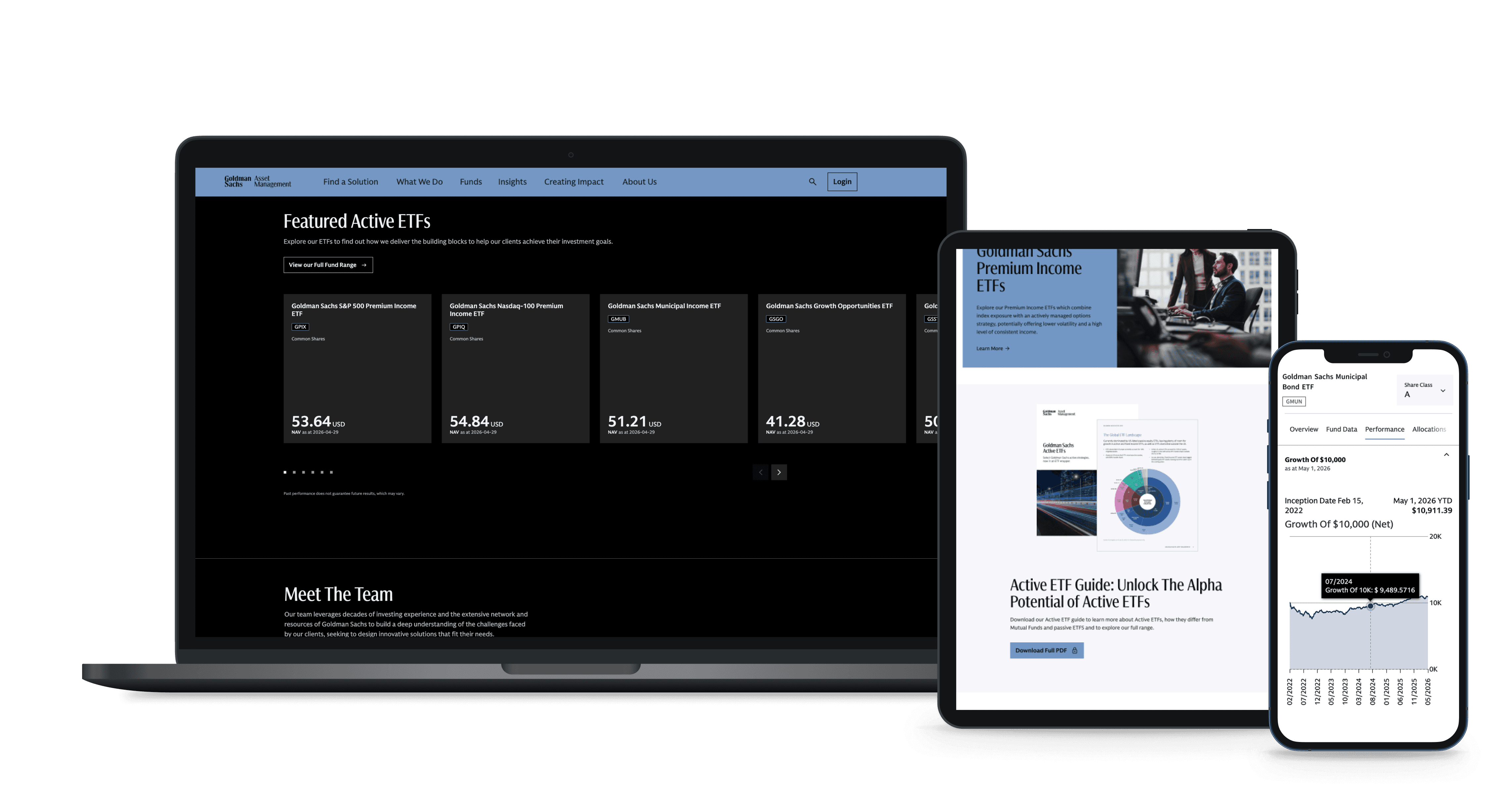
Impact at a Glance
Fund flows
Combined GPIX and GPIC flows post-launch.
Trading volume
%
Lift in monthly average trades across both funds.
Sales leads
Generated by the hub, 60% net-new or dormant prospects.
UX strategy and the redesigned Active ETF hub contributed to the following campaign outcomes.
00 – about my role
I partnered with UX research, product, and marketing to ground the digital experience in real advisor needs. I co-developed the research plan and interview protocol with our UX researcher, defined the stimuli we tested with internal and third-party ETF specialists, and translated findings into a design strategy for both MVP and the long-term roadmap. I owned the UX direction from feasibility assessment through production, driving alignment across global teams.
The firm was about to spend $10 million driving traffic to our site. I wanted to make sure what they landed on was worth the visit.
skills
User Research
UX Strategy
Content Strategy
Information Architecture
Cross-Functional Leadership
Role
Lead UX Designer
Individual Contributor
client
Asset & Wealth Management
timeline
4 months (research through post-launch roadmap)
01 – situation
A $10M campaign about to send traffic to a site that wasn't ready.
Goldman Sachs Asset Management launched its largest digital campaign to date: a multi-channel effort to amplify the firm's active ETF presence across the U.S., Europe, and Asia, backed by roughly $10 million in media spend. The campaign would drive significant paid traffic to the public marketing site. The site wasn't ready to receive it.
Key Problems
ETF specialists, both internal sales teams and external advisors, had no consistent digital presence to support how they evaluate and sell these products. The existing site didn't reflect the real journey of an advisor exploring active ETFs. Without a UX strategy, $10 million in paid media would send traffic to a weak destination.
Constraints
Compressed Timeline
Roughly four months from research kickoff to MVP launch, covering research, design, and execution.
Global Coordination
Multiple teams across the U.S., Europe, and Asia, each with different priorities and timelines.
Engineering Capacity
Limited availability to build net-new features for MVP, requiring sharp prioritization between what ships now and what goes to the roadmap.
02 – Objective
A destination worth the visit, and a lead generation model worth tracking.
Build a digital hub where advisors can learn about active ETFs, evaluate products, and take action, then measure whether that engagement converts to qualified leads for sales.
For Users
Education for the curious. Tools for the ready.
Give advisors a place to move from education to evaluation at their own pace. Product-agnostic content for those still learning. Detailed fund materials and comparison tools for those ready to act.
For the Business
Build the hub. Feed the pipeline.
Launch a scalable Active ETF hub on the public marketing site with a long-term content and feature roadmap. Tie engagement to lead scoring thresholds that feed qualified prospects to sales.
03 – actions
Research first. Design second. A roadmap built to outlast the launch.
Grounding Marketing's Vision in Platform Reality
Marketing came to the table with a detailed proposal: IA recommendations, component requests, and a proposed user journey. Most of it didn't account for the logic or constraints of our web platform. I translated their vision into a technically feasible web strategy, reframing the proposal into something we could execute within our CMS component library and site architecture.
I then audited marketing's wish list of components to assess:
• What could we build with existing components?
• What required enhancements or net-new development?
• What belongs in a post-MVP roadmap?

User Research: What Advisors Actually Need
I partnered with our UX researcher to interview ETF specialists and financial professionals across the U.S. and Europe before any design work started. We wanted to understand how advisors evaluate active ETFs, what they expect from a digital experience, and where Goldman Sachs Asset Management stands relative to competitors.
Research Goals
How financial professionals perceive and evaluate active ETFs
Key stages of the advisor decision-making process
Must-have features, tools, and content for a day-one digital experience
Which competitors advisors consider best-in-class, and why
What We Learned
03 – actions
Translating Research Into Design Opportunities
We took each research insight and translated it into specific content, tools, and features. Working with marketing, product, and analytics, we decided what ships for MVP and what goes to the roadmap. High-impact features launched first. Everything else was sequenced based on what advisors told us they needed most.

Two decisions are worth looking at closely.
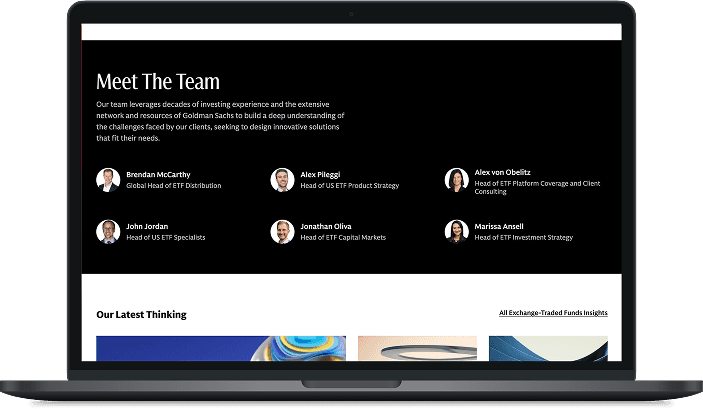
Solving a pain point: team bios.
Advisors told us it's hard to sell a product with no track record. ETF specialists compensate by selling the team and similar products instead. One specialist put it plainly: "Clients always ask about track record, so we're always having to sell the team. Team bios are important for that reason." The design strategy: humanize the investment team through storytelling and highlight other active portfolios they've managed. I designed a team bio component that gives advisors the credibility signals they need before recommending a new fund.
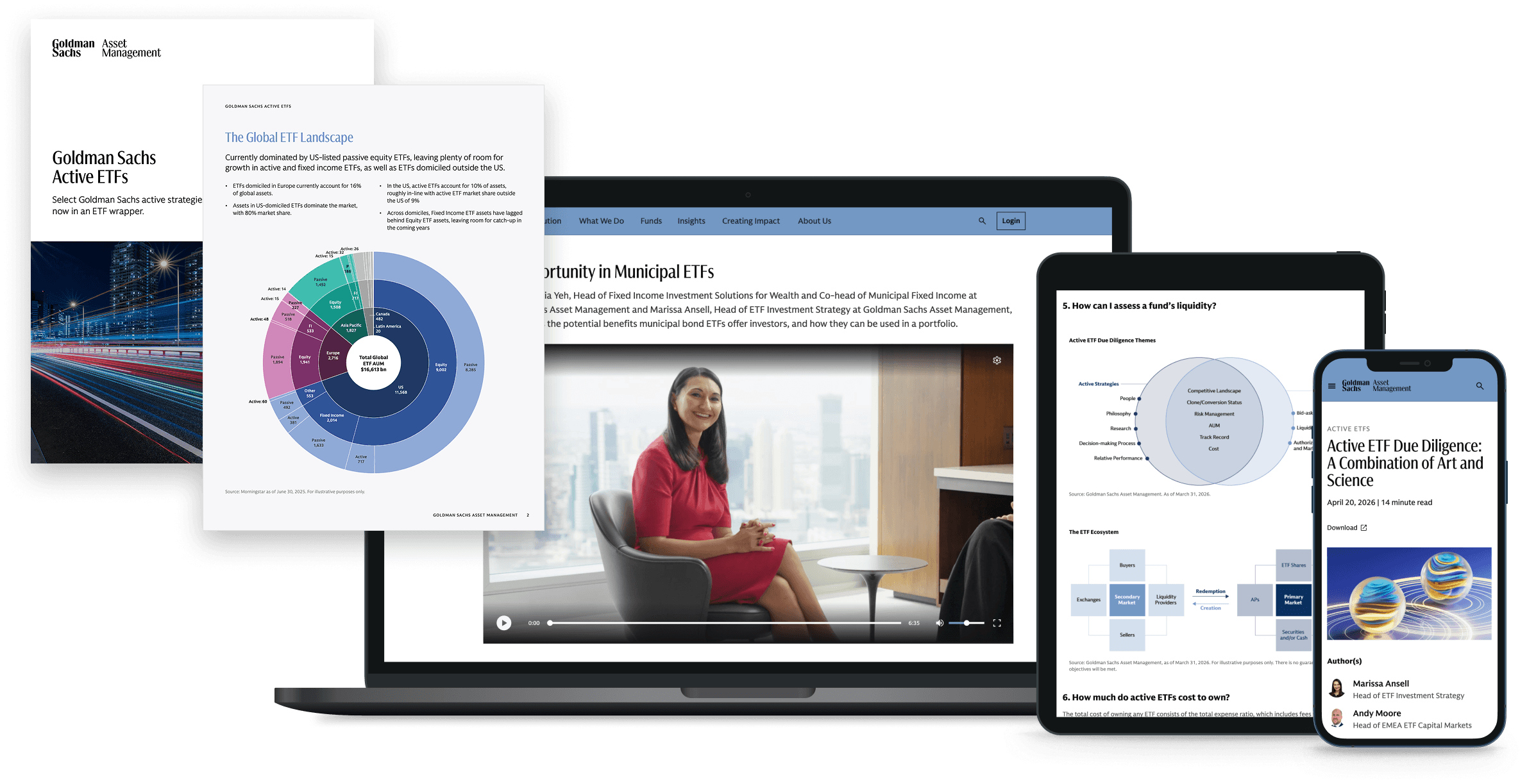
Capturing an opportunity: educational content in multiple formats.
We saw an opportunity to establish Goldman Sachs as a leading education provider for active ETFs, building brand awareness and "mind share" among potential investors. A specialist told us: "There's no shortage of really smart experts at GS," so giving clients different formats to engage with, and the choice of how they want to consume it, matters. The design strategy: deliver educational content across multiple formats, including video commentary, webinars, PDF downloads, insights articles, and data visualizations. Short-form for quick consumption. Long-form for deep dives. Written, video, and interactive, so advisors pick how they learn.
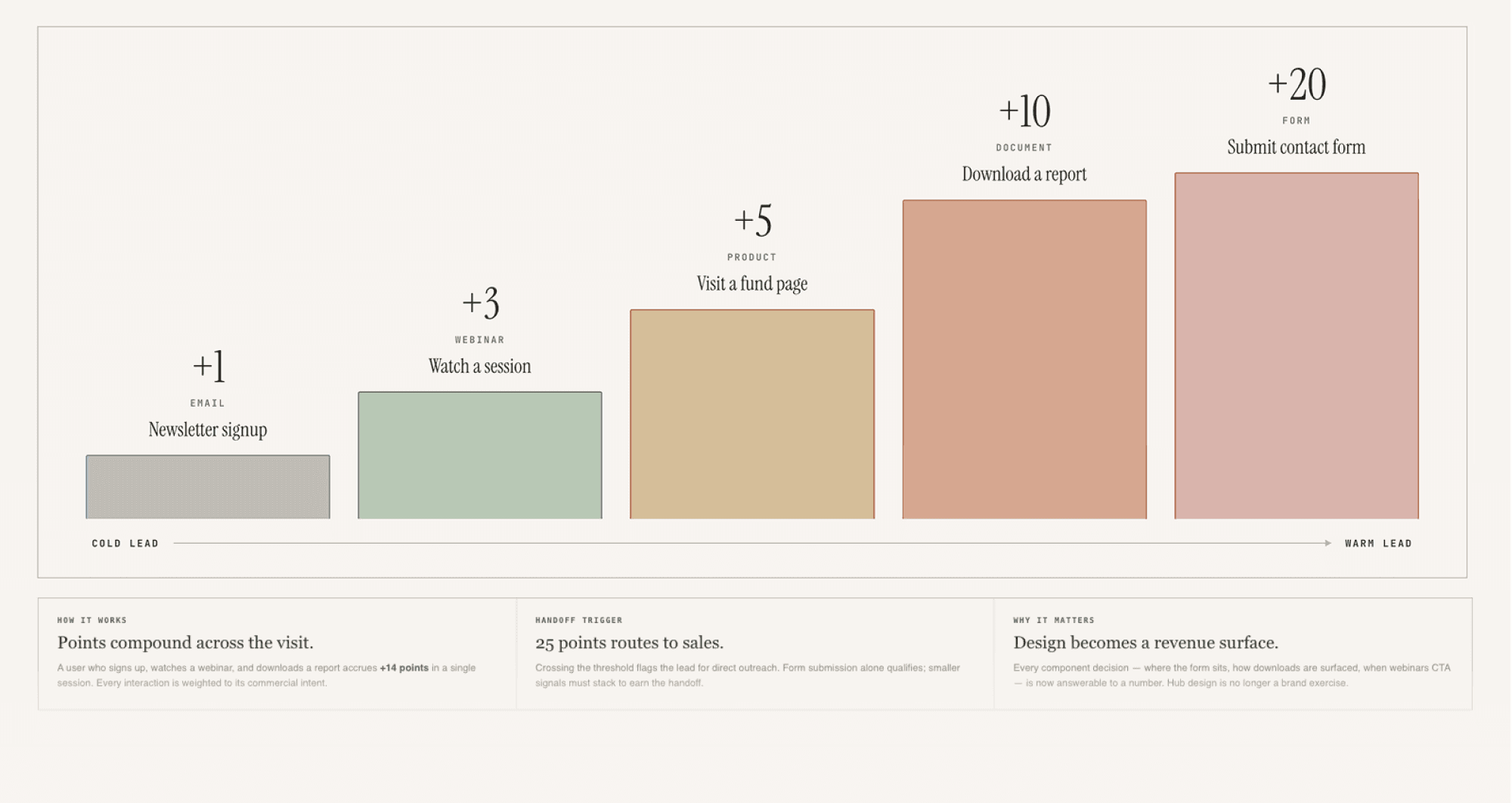
Connecting Design Decisions to Sales Through Lead Scoring
Every interaction on the Active ETF hub is tracked. We assign points to each interaction based on the buying signal it represents. The more engaged the user, the "warmer" the lead. Warm leads feed directly to the sales team and drives revenue.
04 – Results
An advisor hub grounded in research, wired to sales.
The MVP launched with confidence because every design decision traced back to what advisors told us. After launch, I partnered with marketing and product to define the post-MVP roadmap for content and features, grounded in the same research.
By the Numbers
Fund flows
Combined GPIX and GPIC flows since October 2025. Monthly averages up 50% and 33% post-campaign.
Trade Volume
Monthly average trading volume across both funds, totaling 1.6M trades post-campaign.
Sales leads
Total leads generated through engagement on the Active ETF hub, feeding directly into the sales pipeline.
net-new pipeline
Of leads were net-new or dormant prospects, with no sales-quality interaction in the prior six months.
Key Outcomes
Research-Driven MVP
Content hierarchy, component prioritization, and feature scope all came from advisor and ETF specialist interviews. The team shipped what users asked for, not what internal stakeholders assumed.
Scalable Roadmap
The post-MVP roadmap sequences deeper educational content, comparison tools, and advanced features based on what advisors ranked highest.
Lead Generation Model
The site tracks engagement, nurtures users past scoring thresholds, and passes qualified leads to sales. Digital experience feeds the pipeline directly.
Proof Point for the Firm
This project showed leadership that front-loading research delivers business results: more qualified leads, stronger positioning, and a roadmap grounded in real user needs.