In Production
design systems
brand recognition
Breaking the Top 10
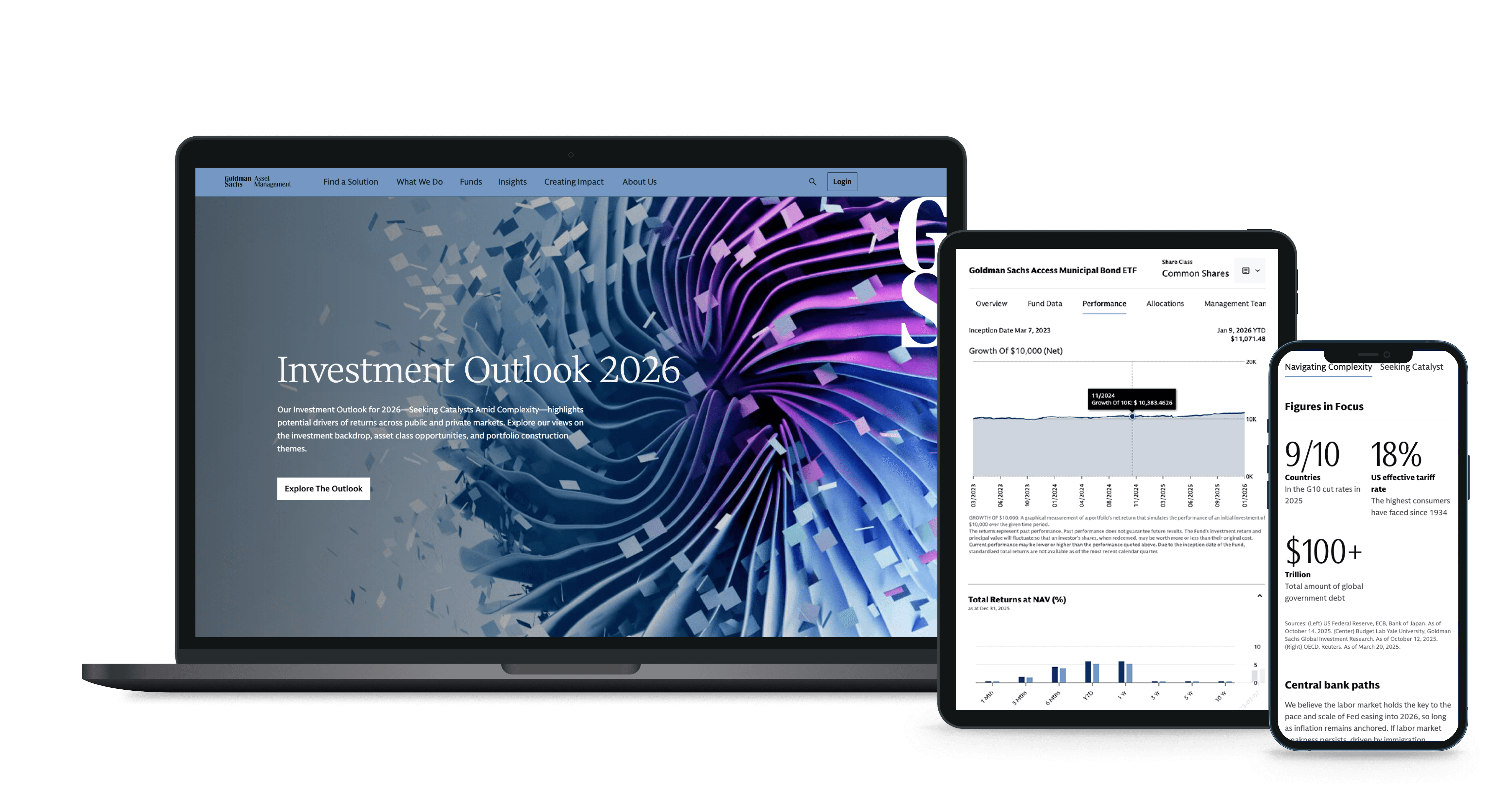
Modernizing Goldman Sachs Asset Management's digital platform, jumping 30 spots to #10 out of 100 in industry benchmark rankings.
Impact at a Glance
Spots
Climbed to #10 out of 100 asset managers in the Living Group industry benchmark.
Components
Designed and shipped alongside 25+ page templates across the platform.
Thousand Pages
Redirected with a comprehensive strategy preserving SEO value through cutover.
00 – about my role
I led the UX redesign of the thought leadership section, one of the site's most critical entry points for institutional clients and financial advisors exploring market insights. I translated research from agency partners into design requirements, conducted content audits, created scalable templates, and partnered with engineering through build and launch. My deep knowledge of our CMS, publishing workflows, and enterprise design system meant I could bridge what stakeholders wanted with what we could realistically ship.
My role blended UX strategy, systems thinking, and close collaboration, shaping a content experience that worked for both users and the business.
skills
Information Architecture
Content Strategy
Design Systems
Visual Design
Cross-Functional Leadership
UX Research
Role
Lead UX Designer
Individual Contributor
client
Asset & Wealth Management
timeline
12 months
01 – Situation
A decade-old site serving two million visitors a year.
Goldman Sachs Asset & Wealth Management's public marketing site serves over 2 million annual visitors: institutional clients and financial advisors worldwide looking for product information, fund data, and investment insights. The site hadn't been meaningfully updated in over a decade. It no longer reflected the scale, sophistication, or global presence of Goldman Sachs, and it wasn't delivering on its commercial value or supporting the firm's digital marketing goals.
Key Problems
The legacy experience was fragmented: inconsistent layouts, colors, and typography across sections. Product marketing information was difficult to find. Analytics and tracking were inadequate, limiting lead generation and sales enablement. The tech stack and authoring environment were outdated.
Constraints
Stakeholder Complexity
150+ stakeholders across asset management, legal, fund services, marketing, and engineering, with competing priorities and slow decision-making cycles.
Engineering Capacity
Constrained development pipeline forced scoping tradeoffs on features and functionality.
Design System in Flux
Asset management components sat on top of an evolving enterprise design system, requiring close coordination with the central design team.
02 – objective
A modern, scalable platform, for users and for the business.
Redesign the marketing site into a modern, scalable, globally consistent platform that makes it easier for institutional clients and advisors to find insights, evaluate funds, and build trust with Goldman Sachs Asset Management.
For Users
Reduce friction. Improve findability.
Make thought leadership content easier to discover, strengthen navigation and wayfinding, and deliver a cohesive experience across the entire site.
For the Business
A future-proof foundation.
Establish a future-proof platform with improved analytics, streamlined content operations, and alignment to the enterprise design system.
03 – actions
From research to rollout.
I structured the work in deliberate phases, each building on the last so design decisions stayed grounded in evidence rather than assumptions.
Mindsets & Journeys
Content & Audit Sizing
Content Blueprints
Competitive Analysis
Component Mapping
Visual Design


Extending the Enterprise Design System
The new site leveraged Goldman Sachs' enterprise design system, but specific asset management components needed to be designed, built, and integrated. I collaborated with both design and engineering teams to build these in Figma, ensuring alignment with system standards while meeting AM-specific needs. This work contributed to the ongoing evolution of the enterprise design system itself.
Image Standards and Visual Consistency
I standardized image ratios and specs across the entire site to maintain visual consistency, optimizing performance, and ensuring flexibility across content types and screen sizes.
Engineering Partnership Through Build and Launch
I worked closely with engineering to translate design into functional, scalable components, providing UX guidance throughout the build. This meant navigating technical constraints in real time, refining interactions, and ensuring the final product stayed true to the design vision.
04 – Results
The first major redesign in over a decade, launched.
The launch of am.gs.com marked the first major redesign of the public marketing site in over a decade. The project required sustained collaboration across marketing, engineering, product, legal, agency partners, and asset management teams — ensuring the new platform met regulatory, technical, and business requirements simultaneously.
By the numbers
+
New components designed + built
+
Page templates
+
Stakeholders engaged
+
GSAM team members collaborating
+
Steering committee sessions
thousand
Pages redirected (preserving SEO)
months
Project duration (design + build)
Key Outcomes
Modernized digital storefront
with improved usability, navigation, and content delivery across the full site.
Seamless legacy transition
A comprehensive redirect strategy for 24,000+ pages maintained discoverability and SEO value during cutover.
Scalable, future-proof platform
with enhanced data tracking, streamlined content management, and a foundation for ongoing iteration.
Enterprise design system alignment.
Custom AM components integrated while maintaining consistency with Goldman Sachs' broader digital ecosystem.