I'm Tyler Kennedy. Chicago native, 10+ years in UX, most of it in financial services. Currently leading design for Goldman Sachs Asset & Wealth Management, where I build systems: reusable frameworks, consolidated platforms, research-driven experiences tied to measurable outcomes.
Great design is just great thinking, made visible. Clarity isn't a coat of polish, it's what's left when the thinking is right. Good design doesn't give people more options. It makes the right one obvious.
Great design is just great thinking, made visible.
I came up through visual design. It gave me a foundation that still drives the work today: rigor, taste, an instinct for simple and beautiful. I moved into UX because polish wasn't enough. In visual design, polish is the goal. In UX, it's the result of thinking. Projects succeed when they solve the right problem.
Most of what I know about UX, I learned on the job. Agency and in-house. A wide range of clients and complex stakeholder environments. A mentor told me early that the design is only ever as good as the thinking behind it. That stuck.
Systems first.
When I solve a specific problem, I try to make the solution work for the next one too. The hybrid search I designed for an adviser platform consolidation was picked up as the model for the public site's global search redesign, which reaches over 2 million visitors a year. On the ETF acquisition migration, I designed the site and its investment tools so the rest of the tools could reuse the same components. Make the one thing reusable.
Most of the job is translation.
The work is more often translation than visual design. I translate a stakeholder's wish list into platform reality, "not feasible" into a tradeoff conversation, design intent into engineering build specs. The visual decisions are the easy part.
Bold vision, measured execution.
I design the ideal first. Then I scope to MVP. Then I phase the rest. I've worked that way on every major initiative, including the platform consolidation shipping now.
Research as a default.
I use research to decide, not to validate. The Active ETF launch anchored a $10 million media spend on adviser interviews, not assumptions. The research happens before the decision, not after it.
As I've moved into bigger work, the craft has shifted again. Less time pushing pixels, more time framing tradeoffs, defending decisions, and selling the work to people who weren't in the room when it was made. Design is inherently subjective. Knowing how to make it land is the senior skill.
Hands-on enough to do the craft. Strategic enough to make sure it scales.
AI, applied to real work.
At work, I use it to front-run vision: taking an idea far enough to sell it before the real thing is designed. Outside my day job, I co-founded Kennedy Construction, a residential remodeling business, and built its product end to end: the marketing site, an application that collects and prices customer input in real time, and the automation that runs it. Not mockups, working software.
I work the same way with AI that I work everywhere else. Plan first, then execute. Build loops so nothing starts fresh. And keep the judgment: the machine executes, but deciding what's worth building is still mine.
AI, applied to real work.
At work, I use it to front-run vision: taking an idea far enough to sell it before the real thing is designed. Outside my day job, I co-founded Kennedy Construction, a residential remodeling business, and built its product end to end: the marketing site, an application that collects and prices customer input in real time, and the automation that runs it. Not mockups, working software.
I work the same way with AI that I work everywhere else. Plan first, then execute. Build loops so nothing starts fresh. And keep the judgment: the machine executes, but deciding what's worth building is still mine.
My Latest Projects
01
Breaking in the Top 10
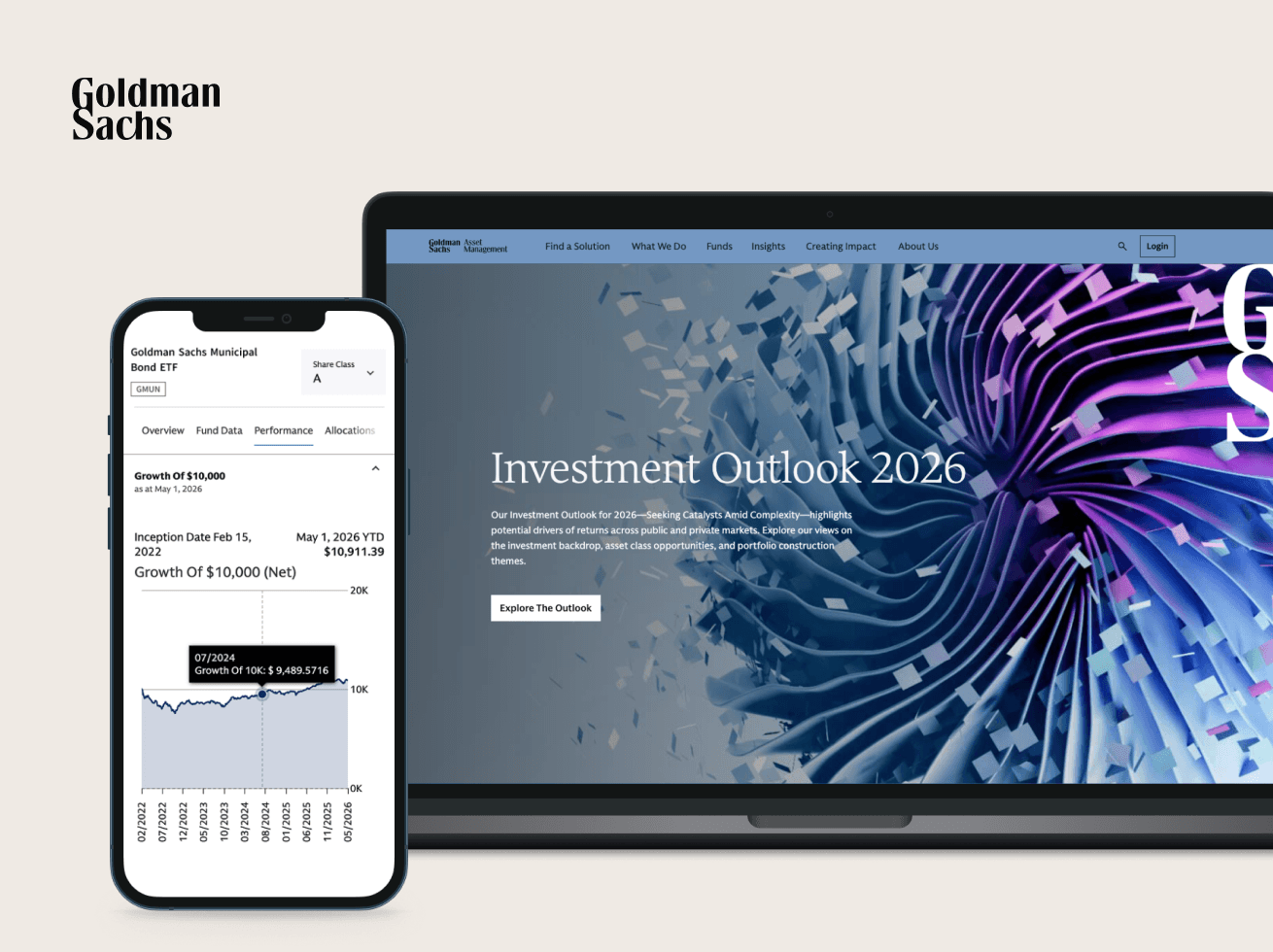
Modernizing Goldman Sachs Asset Management's digital platform, jumping 30 spots to #10 out of 100 in industry benchmark rankings.
In Production
design systems
brand recognition
02
Designing the Destination
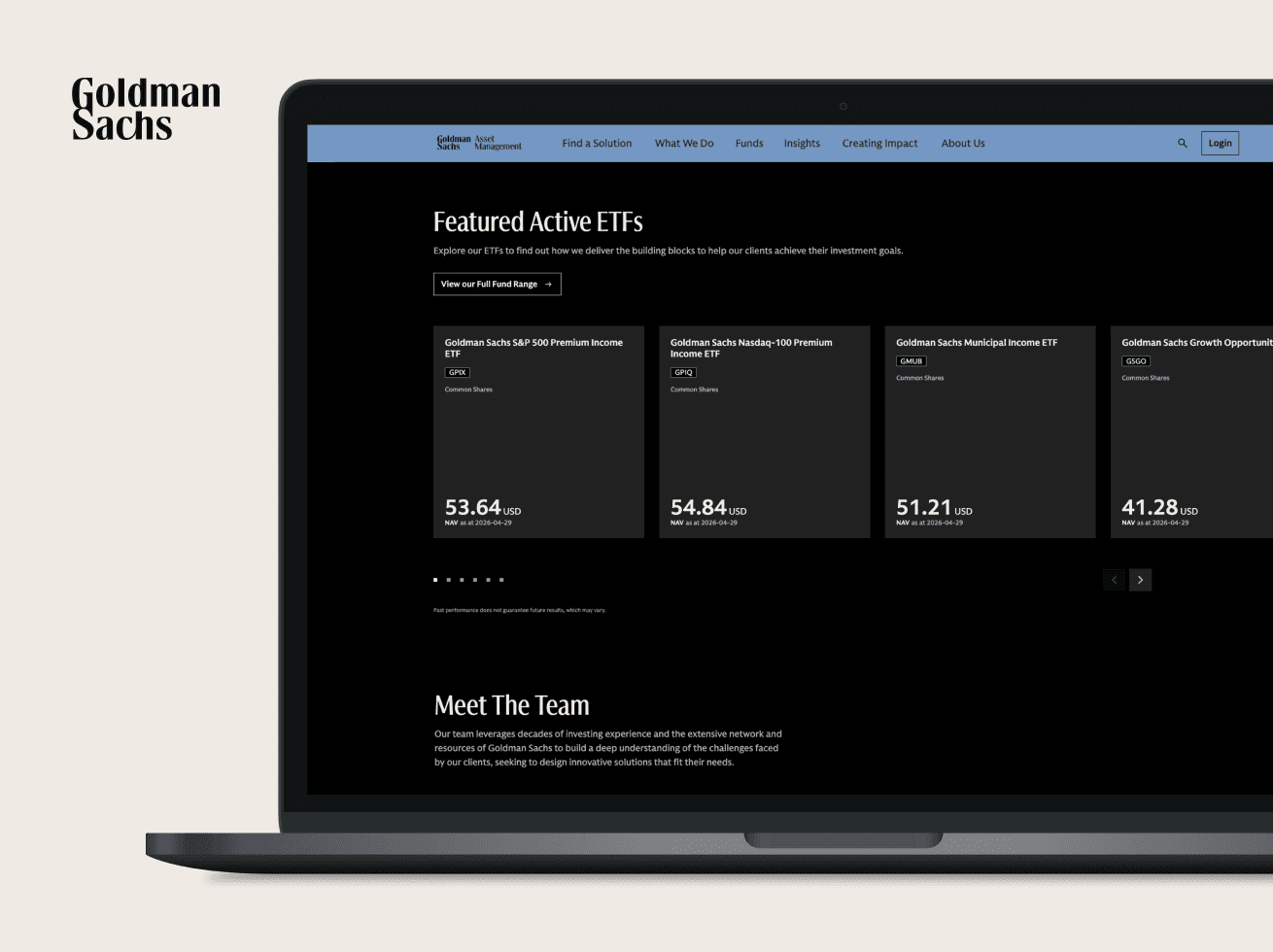
Turning a $10M media investment into a research-driven digital experience that generates qualified leads for sales.
In Production
UX strategy
retention

03
Four Portals to One
Consolidating Goldman Sachs' fragmented adviser experience into a personalized, evergreen dashboard.
In Progress
UX Strategy
Retention